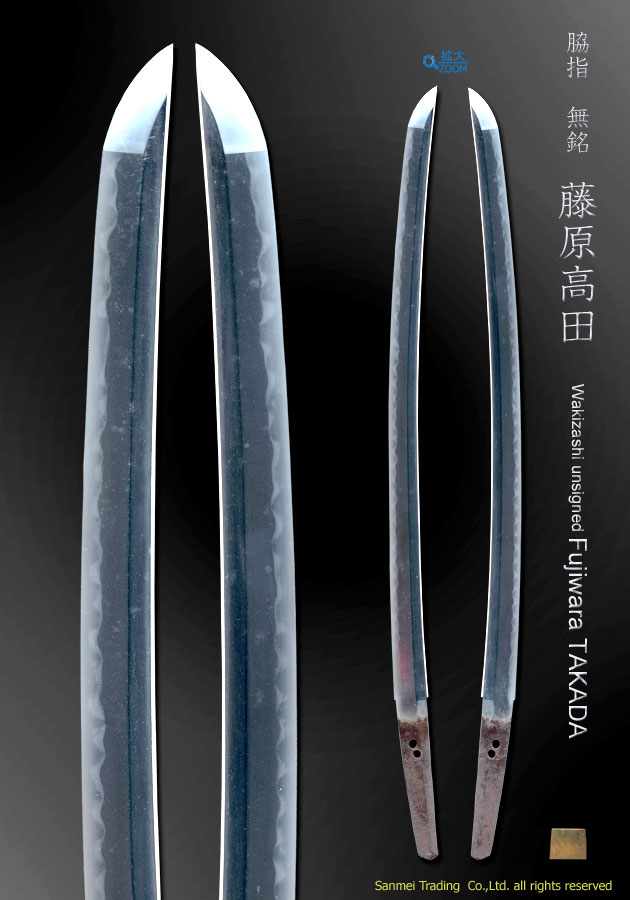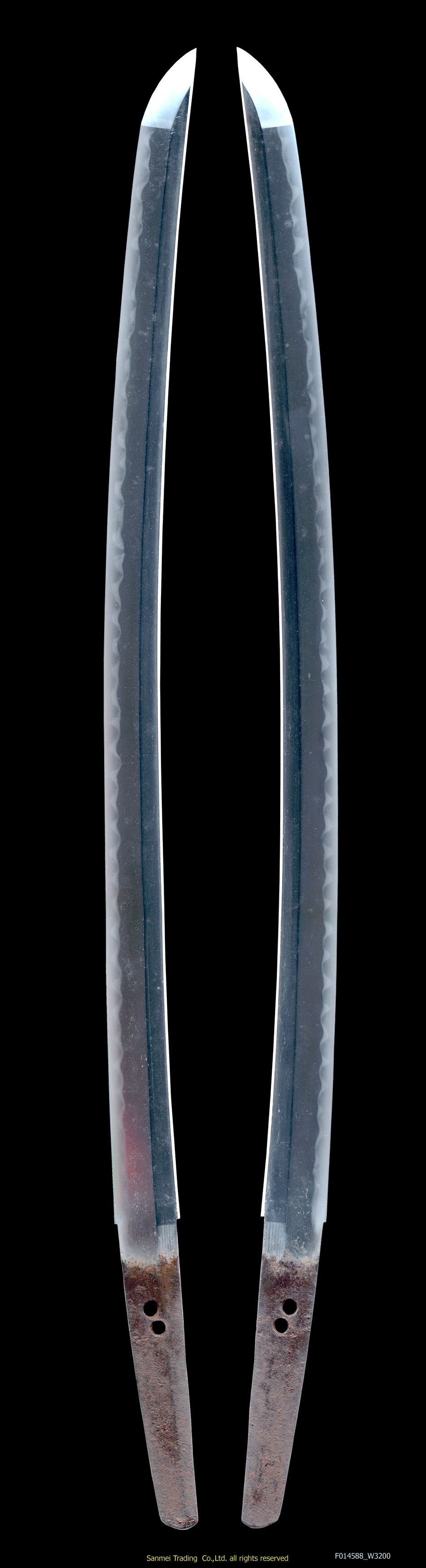
Length of cutting edge49.4cm Curvature1.4cm Width of base28.7mm Width of Yokote21.0mm Thickness of base6.7mm
Kitae(forging pattern) : Kitae-hada is fine Itame wooden grain marks mixing in with Mokume burl hada-ware. Shinogi-ji surface shows Masame straight grain mark.
Hamon(tempering pattern) : Hamon is Nioi based, gunome-midare and Togari-ha (sharp) indication.
Boshi (tip): The temper of the tip waves in Gunome shape and deeply turns back.
Nakago(tang) : UBU un-altered, Shallow slanted left (Kattesagari) filemarks and round kurijiri heel. Two mekugi-ana peg holes. Unsigned.
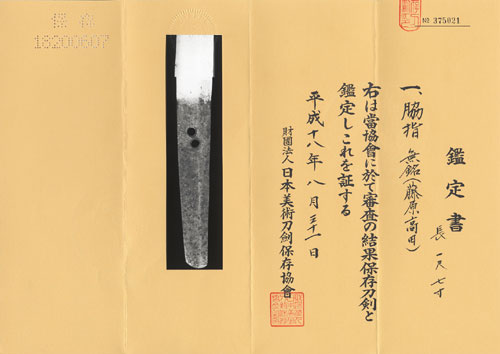
Sword maker TAKADA lineage, a frontier TOMOYUKI who is to say a pupil of Sa-monji, had moved to Bungo province (now in Oita pref.) end of Kamakura period 14th c. During the Warning States period in 16th c., TAKADA makers were exclusively worked for feudal lord Otomo Sorin enjoying the most prosperity. This wakizashi is appraised with a written statement of expert opinion by NBTHK to be judged as a work of Fujiwara TAKADA during Shinto period. The shape with an attractive figure and well balance, elaborate Itame wooden grain forging scene and uniform tempered gunome Hamon, all those aspects were done by skillful hand. Although there are some scratch marks here and there and slight whitish stains, in old polish status, the entire blade still holds massive volume and heavy on hand. Copper ground gold foiled habaki collar, set in a Shira-Saya plain wood mounting.