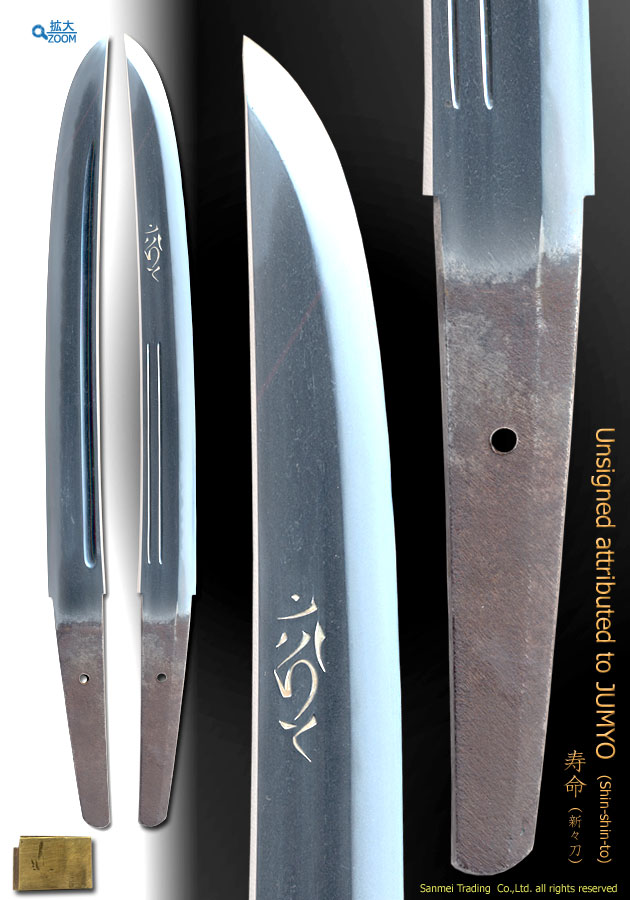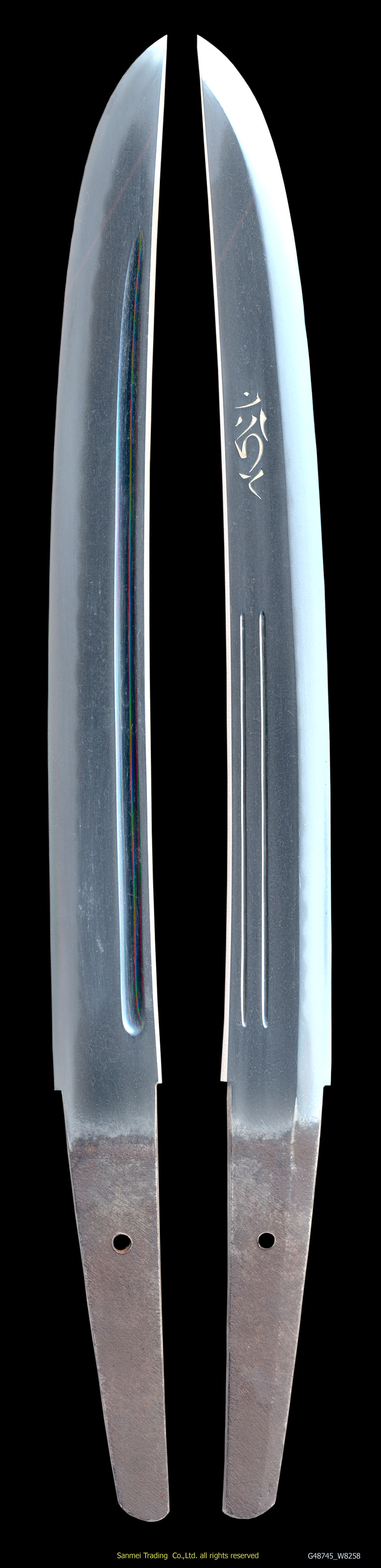
Length of cutting edge31.6cm Curvature0.4cm Width of base32.8mm Thickness of base8.5mm
Forging(Hada): Fine Ko-Itame hada, covering with hard metal granules Ji-Nie on surface with Chikei activity.
Temper(Hamon): Hamon starts with short straight Yakidashi then deep Nie based - long foot Choji (clove outline). Clove feet emit frequently toward cutting edge. Forging, shape and temper are well done and highly skilled.
Tang(Nakago): Nakago is in UBU original. One peg hole. Ha-agari bottom shape and O-Sujikai (Grandly slanting left) filemarks.
Temper of tip(Boshi): Boshi is irregular Midarekomi with medium circle deep turn back where Kinsen (darkish hard Nie-lies) activity works.
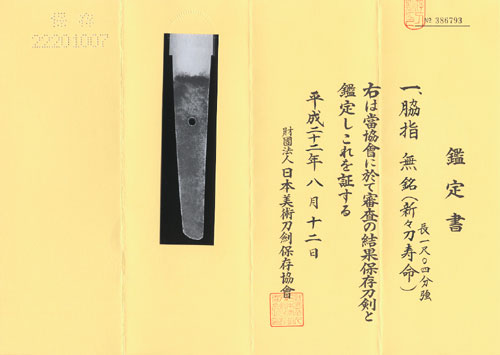
This is an unique example of Edo Shin-shin-to period, combination of flat and shinogi-ridge side so called Kata-kiri-ha zukuri. Heavy on hand, thick in Kasane and extended blade. This wakizashi is recently judged as a work of JUMYO in Kansei era, end of 18th century. Those works by JUMYO were treated as Samurai glories, an exchange of gifts or present given to important guest at a banquet. Not only an heroical shape and delicate workmanship, but also Fudo Myouou (Ācala) Bonji engraving adds it's artistic value.
An original brass habaki collar (some dented marks), Set in Shira Saya plain wood mounting.