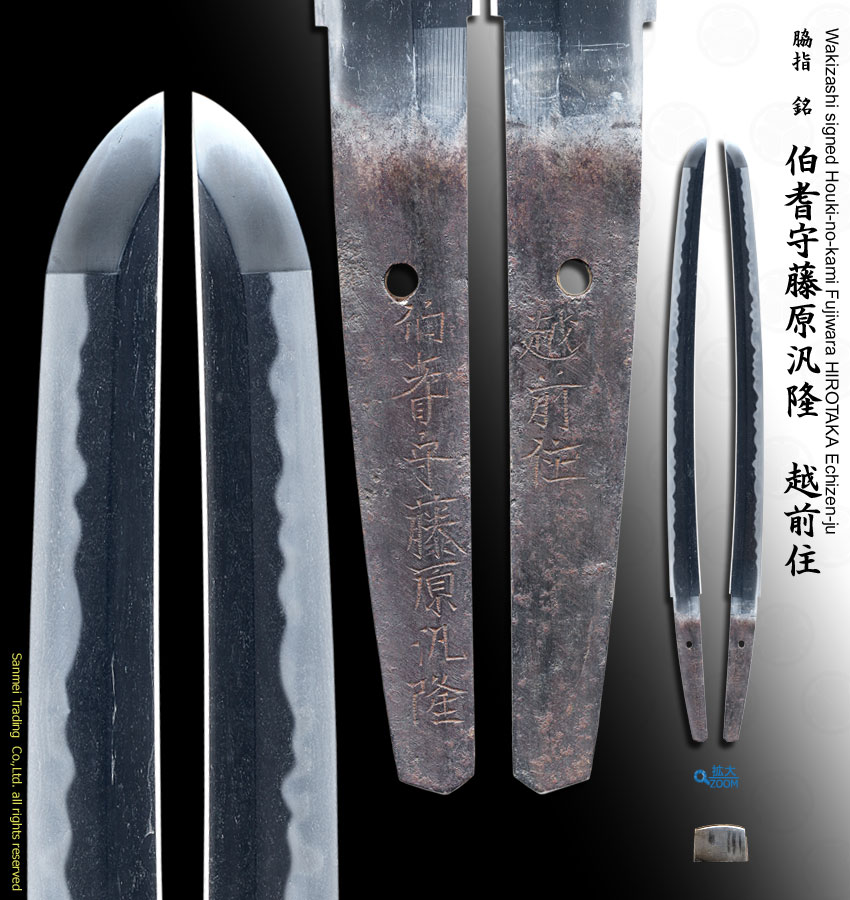
length of cutting edge46.0cm Curvature0.9cm Width of base31.6mm Thickness of base6.5mm Width of Yokote22.5mm
Kitae(forging pattern) : Kitae hada is large mokume-hada and Itame wooden grain mark with a growing small blinking ji-nie granules and thick darkish lines chikei activity. The entire jigane is vividly active with forging pattern. The surface of Shinogiji is straight grained (Masame hada). The entire jigane mark is impressibly visible with swelling Itame/Mokume hada.
Hamon(tempering pattern) : Hamon starts with shallow Notare midare, Gunome, Box-shape, Fist-shape, Foot of Mountain shape, that varies in shape and height. There works with condensed Nie at the feet of gunome and shows Sunagashi brushing marks in the interior of temper. The entire ko-nie trend temper is clear and uniform from the base to tip.
Boshi (tip): Boshi becomes in straight (sugu) with medium circle then turns normally.
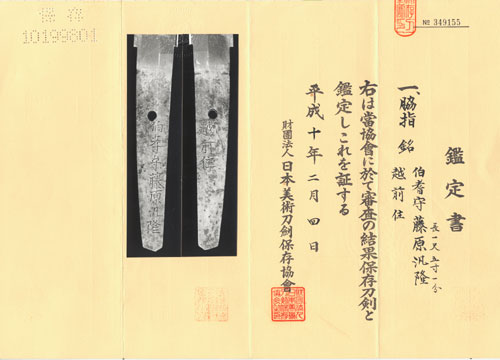
Nakago(tang) : Nakago is UBU (unaltered). One peg hole. Osujikai (slanting left) file marks and V-heel (Iriyama) shape.The signature which is chiselled in front reads as Hoki-no-kami title then Fujiwara HIROTAKA and the reversed side is the place of work Echisen-ju.
Echizen province had been played one of the most important places during Warning States period and many of swords smiths moved to Echizen from Mino province. The smith HIROTAKA (first gen.) was a pupil of KANETANE and both smiths were representative swords makers enjoying great feats in one of the best cutting performance, filled in with warlike spirits from samurai demands, heroically made, thick in Kasane, wide in Mihaba leading to a large Kissaki so called Echizen-style. The subject wakizashi shows a typical workmanship of HIROTAKA, Echizen and remains good patina of tang and clear signature over the 350 years. The blade impressibely remains almost an original shape and fine condition, no visible flaw.
Silver ground polished surface habaki, Shirasaya plain wood mounting included.