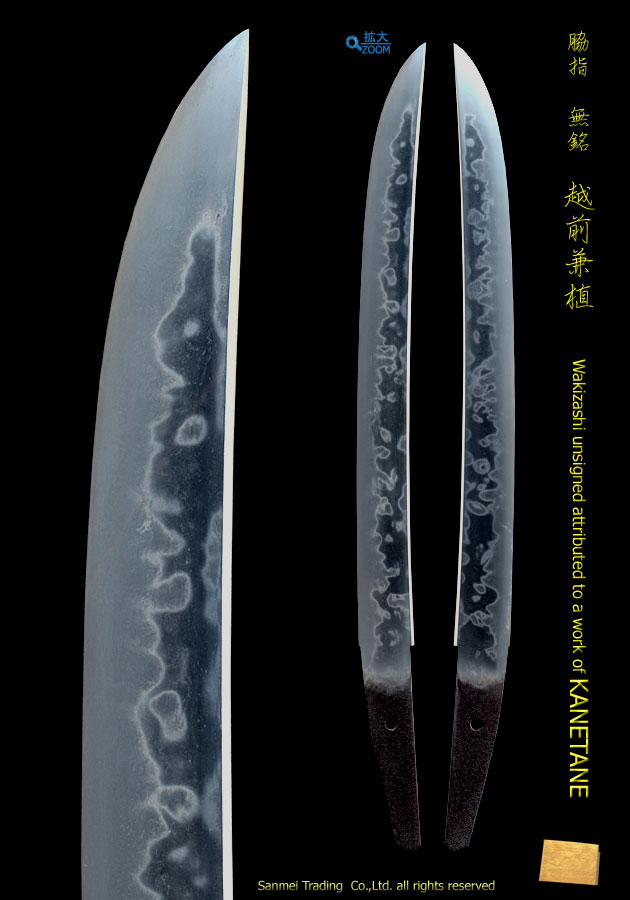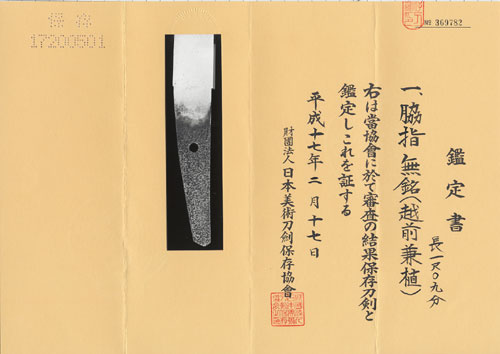
Length of cutting edge33.1cm Curvature0.6cm Width of base30.5mm Thickness of base6.5mm
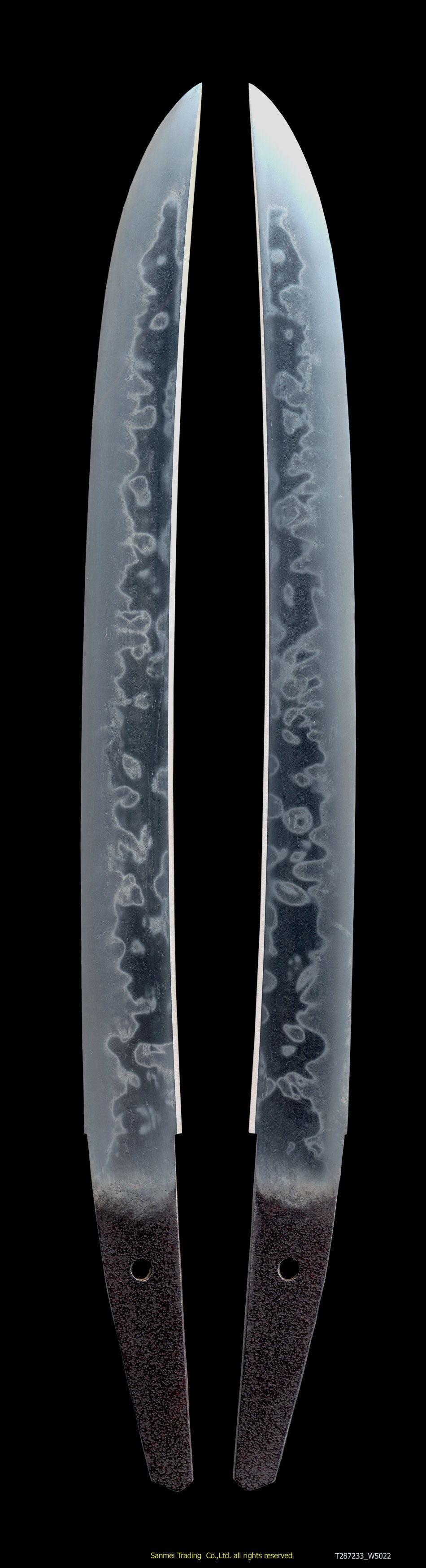
Kitae(forging pattern) : Kitae-hada is Itame-hada (wooden grain) and Mokume (burl marks) mixing in. Along back ridge (Mune), there shows straight MASAME grain indication. Hiraji is covered in deep Ji-nie that generates Chikei hard metal granules reflection effect over the surface. The entire steel shows darkish impression so called Echizen-steel. There are YUBASHIRI (hard metal granules) areas here and there.
Hamon(tempering pattern) : Hamon forms generally large gunome, mixing in with tall tad-pole shape clove outline partially, that varies in height and shape. There are frequent spilled temper marks so called HITATSURA that cover the entire area of blade. The interior of temper activates with thick Nie-feet (ASHI) toward the cutting edge. The entire temper is vividly bright and clear. Grand sight.
Boshi (tip): The temper of the tip generates JIZOU profile shape then turns back deeply.
Nakago(tang) : Unsigned UBU in original which holds an original mekugi-ana retaining hole. KIRI (horizontal) file mark. The shape of bottom is V-shape (IRIYAMA).
The first smith KANETANE, had came from Seki-Mino province to Echizen (now in Fukui pref.) along with their family lineage such as KANENORI to accept the invitation by a feudal lord ASAKURA late 16th century, lived in Ichijodani. The subject Wakizashi shows an typical shape during Momoyama period, wide in mihaba and long (just over One-shaku) cutting edge and Upper fukura is full. Also such HITATSURA temper work was highly valued by Samurais under military spirits. This Wakizashi is heavy on hand, massive and heroic and still remains an impressively excellent condition for the age of 400 years old. To review into the fine selected steel, elaborately forging and prominent technique of temper, this is one of the best examples during the warlike period in early 17th C.
Gold foil copper habaki collar, Fine recent polish, set in a Shira Saya plain wood mounting.